
Article Search
Korrelation von Sprossgestalt und Blattgestalt annueller Dikotyledonen
Correlation of the shapes of the shoot and leaf of annual dicotyledons
That the shape of a plant changes qualitatively and quantitatively during growth was noted as early as Aristotle. He tried to understand this process with the help of four»causes«(aitia) and four»rnotions«(kinesis). He thought that the formative force proceeds from… Read More

Streptocarpus mit Brutblatt
Streptocarpus with a brood leaf
In the genus Streptocarpus (Gesneriaceae) the usual generation of new leaves on the shoot is more or less replaced by a generation of new leaf parts on the bases of abundant leaves. This indicates a homology between shoot growth and leaf growth. ‚Interesting malformations are described which could help… Read More

Zur Dreigliederung der Käfer
On the threefoldness of beetles
Beetles are regarded in their systematic relationships as a superorganism. Concerning their evolutionary differentiation, is there any relation between the different organ-systems most animals have and the different beetle families, genera or species? Proceeding from a threefold analysis of highly… Read More

Die heimischen Johanniskrautarten der Gattung Hypericum im Vergleich
The native species of the genus Hypericum compared
In Middle Europe the genus Hypericum is divided into six sections systemizing ten Hypericnm species according to morphological characteristics. In our proposed order, Hypericum perfomtum as a mesophil perennial plant is positioned between the related hygro- and xerophil species. Within… Read More
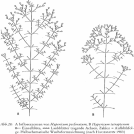
Kopffüßler, Schnecken und Muscheln in ihrer organismischen Verwandtschaftsordnung
Cephalopods, snails and bivalves in their organismic relationship
This contribution was first published in 1973 by Thomas Göbel after mutual discussions on the subject. It is reprinted here enlarged and supported by further details. The main point is to demonstrate how the molluscs can also show the scientific fruitfulness of a… Read More
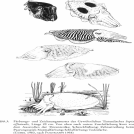
Die Manteltiere (Tunikaten) Aspekte zu ihrer Dreigliederung
The tunicates - aspects of their threefoldness
The concept of threefoldness (sense-nerve system, metabolic system, rhythmic system) is applied to the hermaphroditic tunicates with their classes Appendicularia, Thaliacea, and Ascidia.
Ascidians are sessile organisms with a tadpole-like free-swimming larvae but often with a purely… Read More
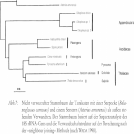
Dynamische Anatomie des Fuß-Skeletts und ihre Darstellung im Märchen vom Aschenputtel

Der Fuß, die menschlichste Gliedmaße
The foot - the most human limb
Physical support and movement are basic functions of the foot in standing and walking, demonstrating the action of gravity and metamorphosed sunlight as the energy source for all active body movements. Calcium is a substance with a special relation to gravity and bone. ln relation to phosphorus/calcium… Read More
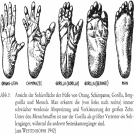
Beiträge der klinischen Rhythmusforschung zur therapeutischen Physiologie
Contributions of clinical rhythm research to therapeutic physiology
In the controversy between different medical approaches (conventional, alternative etc.), dogmatically holding to one’s own position is as unproductive as polemical attacks on the approaches of others.
In clinical chronobiology and chronomedicine there is… Read More
Tycho Brahe in seiner gegenwärtigen Aktualität
Tycho Brahe and his modern significance - 14th December 1546 - 24th October 1601
On 24th October 1601 Tycho Brahe died. His life-work enabled Johannes Kepler’s discovcry of the so called Kepler’s laws. With Brahe and Kepler a thousand year old striving for the mathematical description of the planets’ orbits rcached its culmination.… Read More