
Article Search
Zur Gestaltbiologie der Schlangen
In the last years of his life, it was a great concern of Mathias Küster (1950–2022) to write down his ideas on the gestalt biology of snakes, even though he no longer saw himself in a position to do so alone. However, the project, which was started together in 2021, could only be completed after his death. With regards to content, the… Read More
Parrots and People
The approximately 398 species of living parrots (macaws, parakeets, cockatoos, etc.) comprise a more or less homogeneous group of birds found mostly in tropical and subtropical regions. No other group of wild birds has attracted such strong human interest, and conse- quently parrots are the most popular avian pets around the world, from the… Read More

Cup-and-Ring Marks
This study examines the phenomenon of the so-called »cup-and-ring marked rocks« from the late Neolithic and early Bronze Age, as they occur particularly in Scotland and on the Atlantic fringe of Western Europe. This research report has its focus on their aesthetic ef- fects. A phenomenology of their appearance is worked out by starting with the… Read More

Die Steigbildmethode
Until the 1980s, the »Rising Picture Method« was valued in anthroposophical contexts as one of the »Picture-forming Methods« and was considered particularly suitable for making statements on the quality of plants and plant extracts. It turned out, however, that many of these assumptions did not hold true; for example, the relationship of the… Read More
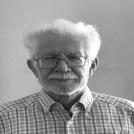
Wolfgang Schad (27. Juli 1935 - 15. Oktober 2022)

Erinnerungen an die wissenschaftliche Zusammenarbeit mit Wolfgang Schad

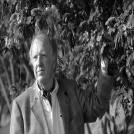
Wolfhard Wimmenauer (8. Mai 1922 - 9. Januar 2023)
Geschichte und Gegenwart des organismischen Denkens in der Biologie
Summary
Throughout the history of biology, there have always been two opposing basic views of life. The one view tried to attribute the processes of life to mechanistic, physical-chemical principles. Rejecting this view, the other one tried to find forces or… Read More

Homoikonik: Laubblatt, Einzelpflanze und Spermatophyten zeigen dieselben drei Bildeprinzipien, die die Alchemie Sal, Merkur und Sulphur nennt.
Homo-iconics (self-imaging) describes how the design type of the spermatophytes, which appears most concisely in the design type of annual dicotyledons, correlates in its imagery with the individual leaf as well as the design of the three divisions of the spermatophytes. Leaf, single plant and spermatophyte type are homoiconic and show at the… Read More
